
22.03.2022 From 2G to 5G: A Brief History of Mobile Communication Standards
First things first: the history of mobile communications in Germany obviously did not begin with 2G.
After the Second World War, West Germany actually operated the largest public mobile network in the world, though it had little in common with today’s technological standards and usage possibilities. Initially, calls were still connected by an operator, and radio cells had a radius of up to 150 km. It wasn’t until the second half of the 1980s that the 200,000 users of the so-called C network had a uniform dialing code and used the first portable phones, which went down in mobile communications history as “bones.” The leap into digitization, referred to as 2G, was already an achievement of unified Germany.
The opening of the mobile communications market in Germany
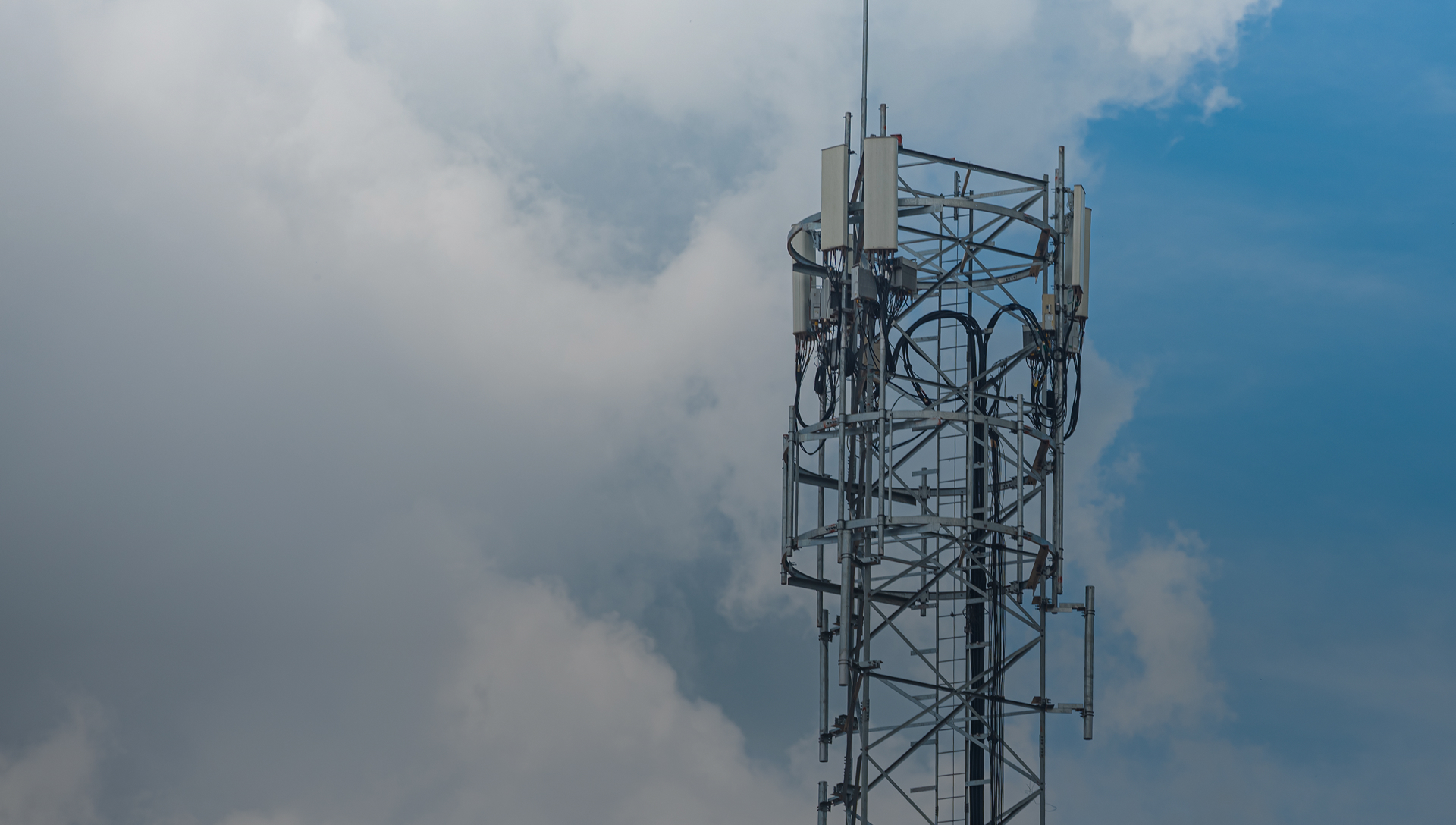
The 2G stage includes the D and E networks, both of which emerged in the early 1990s and were fully digital for the first time thanks to the use of the GSM standard. As a result of the privatization of mobile communications, new providers were now also allowed. Until then, there had been a monopoly with Telekom’s predecessor DeTeMobil; now, for example, the E network was provided by the private company E-Plus. This caused a sharp increase in demand for new transmission tower sites, especially since the frequencies used were higher, requiring an even denser network of facilities. Site acquisition became an important line of business. A particular challenge in finding suitable locations was that the systems initially required a great deal of space. What is now about the size of a refrigerator was then more like the size of a garage.
To support the major network operators, specialized companies increasingly emerged to handle the planning and management of individual sites and to take over the processing of approval procedures, some of which lasted for years. Furthermore, any structural modification to the buildings supporting the transmission towers, as well as any new provider adding its antenna, required further adjustments to the system. Through fast and flexible personnel management, subcontractors made a significant contribution to accelerating network expansion and ensuring its quality.
During the 2G phase, mobile communications finally conquered the cities. The steadily increasing number of mobile phone users required ever smaller radio cells. From the mid-1990s onward, mobile data usage also grew significantly. Initially, this mainly meant sending SMS messages; from 2000, mobile internet usage also became possible. However, since the data speed was not really sufficient, GSM was expanded to EDGE, which meant a fourfold increase in speed. By the turn of the millennium, GSM networks in Germany were fully developed nationwide, and the domestic mobile market already served 48 million connections.
Clear run on the digital data highway
But this was no more than an intermediate step. With 3G came the UMTS standard, which also became known as the digital “data highway.” A large bandwidth allowed for the simultaneous transmission of various data packets for the first time, leading to a significant acceleration in mobile data transmission. Further developments from HSDPA to HSPA and finally HSPA+ increased the maximum transmission speed to 42 Mbit/s. The launch of the iPhone in 2007 ushered in the rise of the smartphone with its wide range of uses: from mobile video conferences and streaming TV programs to fast internet usage—all while making calls. The only downside: just like in “real” life, when too many users are on the highway, traffic jams occur.
Continuous acceleration
Time, then, for further expansion. Since 2010, LTE has made data transmission in Germany even faster, after the Federal Network Agency auctioned 4G licenses at record prices. Following further frequency auctions in 2015 and 2019, LTE primarily closes broadband gaps in rural areas, provides widespread mobile access to high-speed internet, and achieves speeds of up to 1000 Mbit/s.
Since 2019, 5G has not only brought improvements to private mobile communications with tenfold transmission speeds of up to 10 Gbit/s, but has also opened up new possibilities for industrial production (Industry 4.0 and IoT), new forms of mobility (autonomous and connected driving), telemedical services in healthcare, as well as optimizations in agriculture and energy supply.
You don’t have to be a prophet to predict that this development is far from finished. An important milestone will undoubtedly be the development of an open mobile communications standard. Sinnwell is also part of the Europe-wide O-RAN Alliance, which is currently developing this standard.